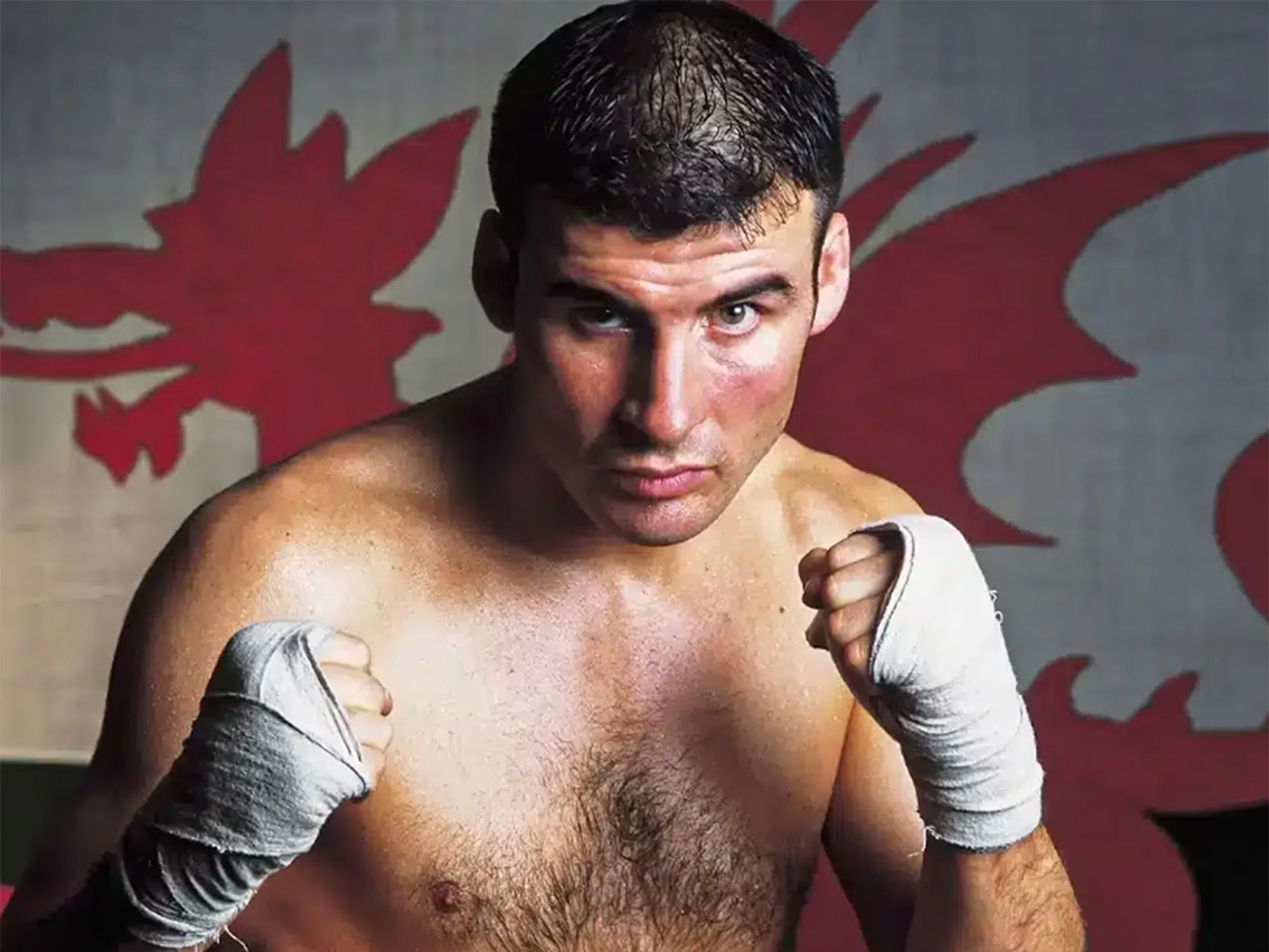


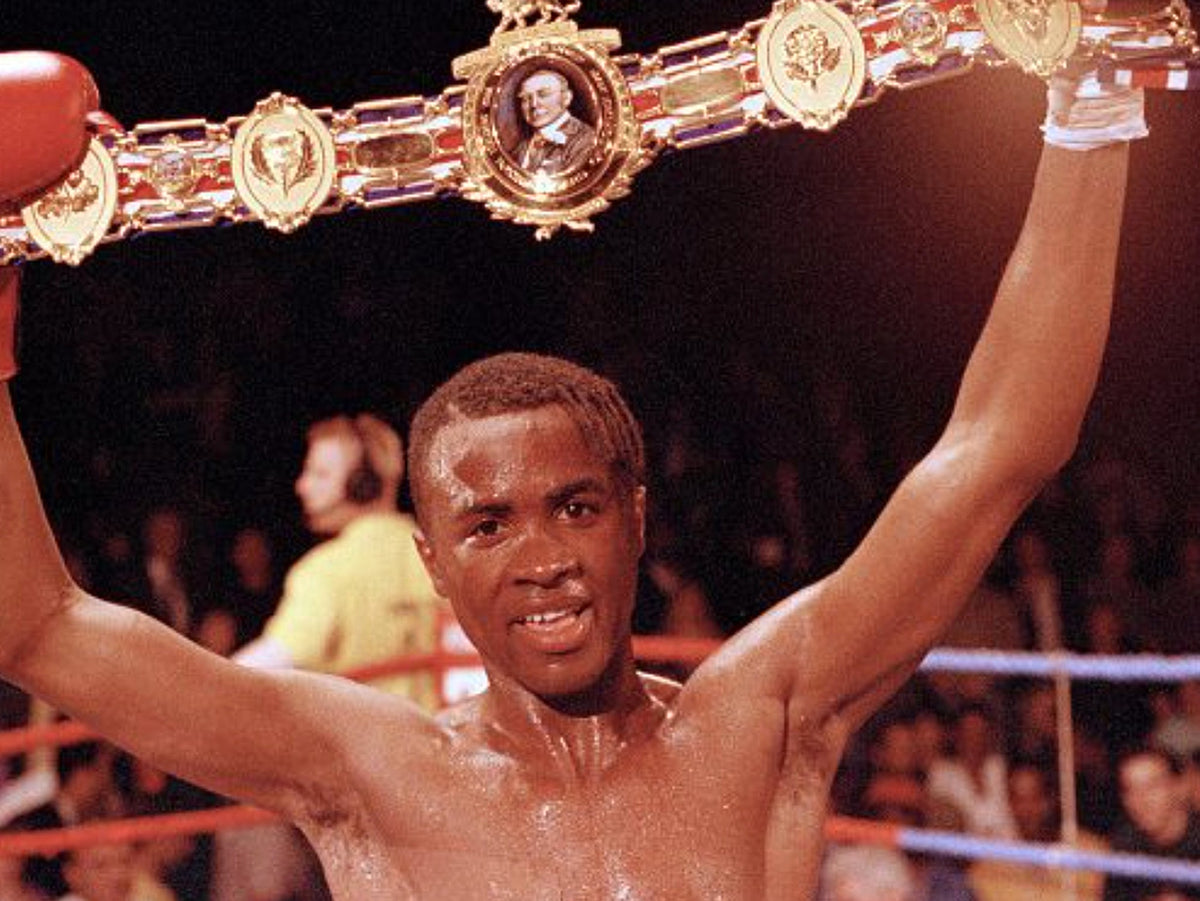
“That moment they announced I was world champion – that was unbelievable. That was my childhood ambition achieved. That was my journey complete and something nobody could ever take away from me. I was down in the history books forever.” Colin McMillan

Boasting a record of 65 fights, with 14 defeats as an amateur, Colin McMillan, AKA ‘Sweet C,’ won the London ABAs four times and represented England on seven occasions. The Barking favourite turned professional on 29 November 1988 at the age of 22 and boasted a record of 35 fights, only four losses, and became British, Commonwealth and world featherweight champion. British Vintage Boxing asked the 126 lbs supremo to recall his three most memorable fights.
“I hope you don’t mind, but I’ve chosen four. One of them was when I fought against Sylvester Osuji at the Broadway Theatre, Barking [on 30 November 1989], which was the night that Frank Warren got shot. That fight obviously sticks out.
The boxing side of it was good as I stopped Osuji in four rounds, but the build up to the fight with Frank Warren being shot and the whole situation was then quite surreal. My wife and my friends were outside when the shooting happened and everybody in the arena were on tenterhooks after that, trying to work out exactly what was going on. That was one of my most memorable fights that would be difficult for everyone to forget.
My second most memorable fight was at the London Arena against Darren Weller [on 25 September 1990]. George Foreman had come over to the UK and was fighting another American called Terry Anderson, who he knocked out in the first round. There were 5,000 people at the Arena and to be fighting on the same bill as someone who fought in that era of Muhammad Ali, not to mention being a former world champion and one of the greats, was something else.

“As for my fight, I think it was one of my best performances when I fought Weller and I had a lot of support at the London Arena, which was like a mecca of boxing in London at the time. The original opponent was supposed to be Steve Robinson who pulled out, who I think was from the same camp in Wales. At the time, Darren Weller was being touted as the better of the two, and I boxed really well that night and stopped him in the second round. That show was being aired live in America, because of George Foreman and I got some good feedback from the Americans. I was hoping that they might want me fighting over there soon after, but it never happened.”
As it goes, McMillan’s two fights prior to Weller were both in the USA, against Tyrone Miller and Malcolm Rougeaux, in Mississippi and Louisiana respectively. Perhaps his first and second round demolition of said opponents made him a man to avoid on the other side of the pond, hence the lack of invitations to return. McMillan did however look back at his time in America positively. “It was a great moment in time. I trained over in New York and Vegas, plus in Miami with Ray Arcel and also Angelo Dundee.
“I got some great experience in America and going out to Louisiana was under the auspices of Beau Williford, who has sadly passed away now. He came over to my British title fight, but we got to know him well over there and he looked after us and gave us an insight into how the American boxing system works, which is a lot less organised than it is in the UK. The Americans also have a different kind of mindset as boxers, which is kill or be killed and they really come for you. What a great experience. They were good learning fights and helped to get me used to fighting in different environments.
“My next fight that stands out for me is when I won the British featherweight title against Gary De Roux [on 22 May 1991 at the London Arena], which was very special for me. Throughout my amateur career, I was London champion four times and I lost in two national [ABA] finals, when a lot of people thought I’d won both of them. However, I didn’t win and as a result I was always the nearly man. To then beat Gary and become British champion was a great accomplishment, because I was now in the history books and nobody could take that away from me.

“Going into that fight, Gary was very dangerous and was an avoided man of the division. He was a big puncher and had knocked out Sean Murphy before. Beforehand, a lot of people thought he might be a bit too good for me, too seasoned and powerful, and that I wouldn’t be able to cope with him. However, I boxed really well that night, broke him down and stopped him in the seventh round. The good thing is we’ve remained friends ever since and we always touch base every few months to find out how each other are doing. We have a lot of respect for each other, which is what boxing should be about.”
Winning the British title comes with great kudos, but every British fighter’s dream is to go one better and defend said title enough times to win the coveted Lonsdale belt outright. Three fights after defeating De Roux, McMillan was up against Anthony Joshua’s old amateur coach, Sean Murphy on 29 October 1991, at the Royal Albert Hall, putting his British strap on the line once again. McMillan expressed his emotions on winning the Lonsdale belt and entering the record books. “It’s another great accomplishment which I’m really proud of. At the time I think I went into the history books as the fastest winner of the Lonsdale belt, in 160 days. To beat Sean convincingly, who was another decent puncher and quite confident, at the Royal Albert Hall as top of the bill, was another highlight of my career. That win helped to pave the way for me to fight for the world title.”
Three months later, McMillan beat Ghanian Percy Commey for the Commonwealth title, which certainly helped to springboard him two fights later to fight for the ultimate prize. McMillan recalled. “As a young kid, my dream was always to follow in the footsteps of Muhammad Ali, Sugar Ray Leonard and fighters like that. Go to the Olympics, win gold and then become a world champion. That was always my aim from when I started boxing at about the age of 15.
“When I got the chance to fight Mauricio Stecca for the WBO featherweight world title, it was great because he’d gone to the Olympics and he’d won a gold medal. For me, by fighting him kind of gave me a chance to show that if I beat him, that I may have perhaps had a chance in the Olympics back in the day. When we did fight and I did beat him, it was more than just becoming a world champion. In a way, that win, a little bit, made up for not going to the Olympics and fighting for a medal.”

Taking the interview over the line, we indulged in some rapid-fire questions with the Barking favourite.
Strongest chin of any opponent? = ‘Hmmmm. I’ve never thought about that. To be fair, Stecca had a good chin. I caught him with some good shots and he wasn’t going anywhere.’
Best engine? = ‘Paul Ingle. I fought him in my last fight and at the time I thought I’d be too experienced for him and perhaps have too much ability. However, he surprised me and was nonstop. As the fight progressed, he took over. ’
Single hardest puncher? = ‘Hmmmmm. Gary de Roux hit hard, but I’d have to go with Dean Phillips, because he was the first fighter to ever knock me down. I did however come back and win the fight, which was on the undercard of the Nigel Benn v Vincenzo Nardiello fight, at the London Arena.’
Paul Zanon, has had 11 books published, with almost all of them reaching the No1 Bestselling spot in their respective categories on Amazon. He has co-hosted boxing shows on Talk Sport, been a pundit on London Live, Boxnation and has contributed to a number of boxing publications, including, Boxing Monthly, The Ring, Daily Sport, Boxing News, Boxing Social, amongst other publications.