JAN 2026

THE JOHNNY NELSON INTERVIEW

JAN 2026 <h2>THE JOHNNY NELSON INTERVIEW</h2>

“A loss is as important as a win, as long as you learn from it and don’t let it break you. Ignore the negatives and the naysayers, because they don’t see what you see.”

 Johnny Nelson

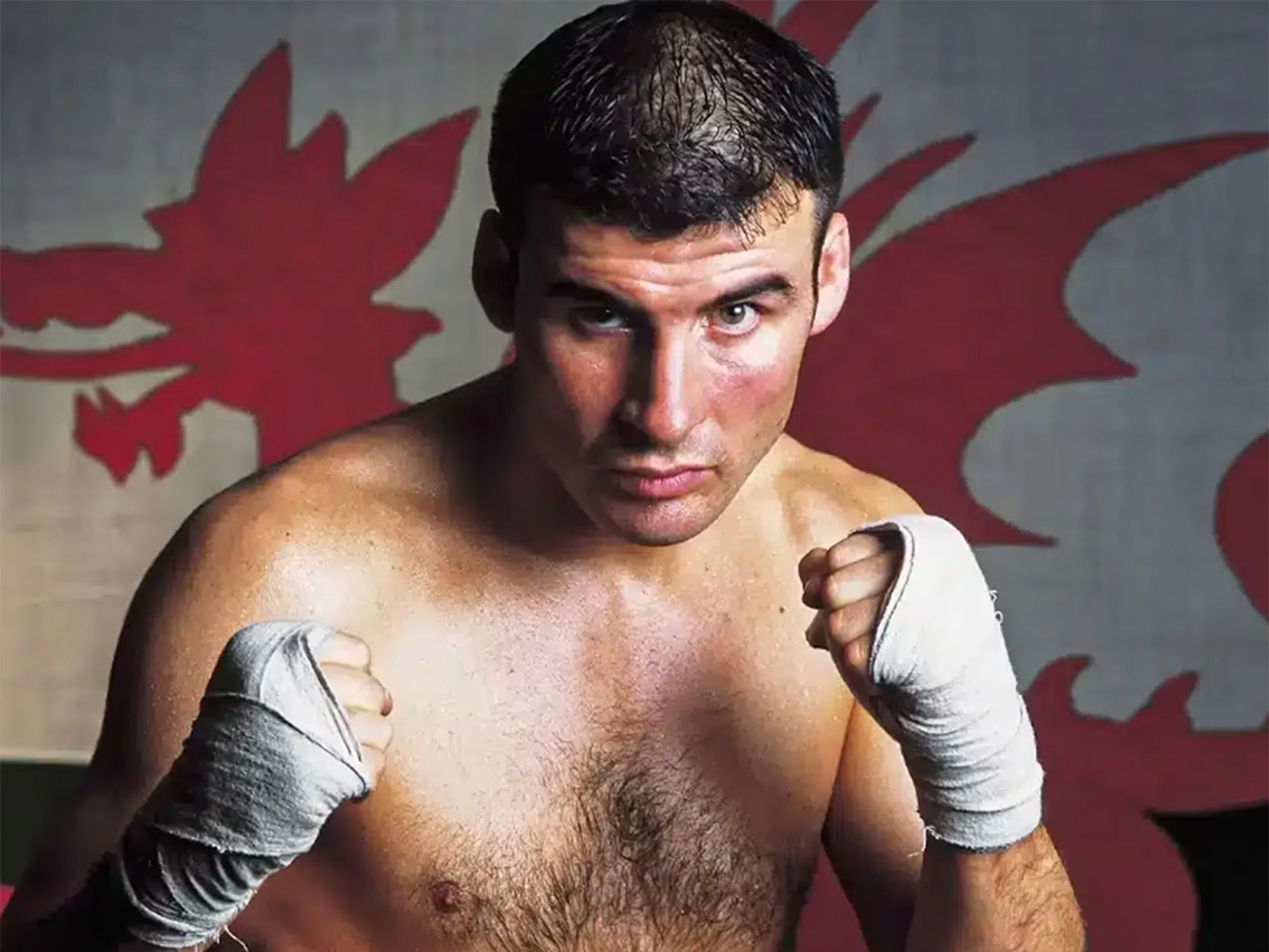
 45 victories, 12 losses and two draws. On paper, it doesn’t shout out ‘world champion,’ but that’s what makes this particular boxing record such a great read. It’s a journey of determination against all the odds and how to truly face challenge in the face of adversity and reach the top.

Sheffield born, Ivanson Ranny ‘Johnny’ Nelson came into this world on 4 January 1967 and hailed from a cosmopolitan blend of Dominican heritage from his father’s side and Jamaican-Cuban, from his mother’s. The Sky Sports favourite candidly explained his route into the square ring. “I followed my brother. I actually didn’t want to box or fight, but he did it and I then did it. No other reason.”

Nelson’s following of his brother’s landed him eventually at the famous Wincobank gym. The cruiserweight king recalled his first encounter with the gaffer, Brendan Ingle. “I remember seeing him sat in the corner, next to the ring, watching the sparring. As he’s looking at the fighters, I stood at the door and didn’t come in, because I was a bit of a shy lad. Brendan beckoned me over to speak to him and asked me to tell him who I was and what I was doing there. I told him my name and he said, ‘Stop there. Hold on a minute and face the wall.’ I thought, ‘What?’ When I look back, that’s when I realise that was the first day of what he called, ‘The Brain Job.’ Brendan could tell I was a shy lad and wanted to work on my confidence and self-belief. One of the first things he said to me was, ‘What you doing here?’ I said, ‘I’ve come to join the gym.’ He then said, ‘What have you heard about me?’ I replied, ‘I heard you’re a conman.’ He started laughing and said, ‘What do you think?’ I said, ‘I want to find out for myself.’ He said, ‘Good answer.’ That was it. The rest is history. What made Brendan such an amazing trainer? He understood people, his patience and unorthodox teachings. Brendan always worked on the head of the person, because he believed if you got that right, you could achieve anything. If you were physically gifted, that was a bonus.”

Nelson lost 10 of his 13 amateur fights. Surely that was the sign to hang up the gloves. “I didn’t care to be honest. My mates were at the gym and I was there for the social side, having those bus trips with them and cracking jokes with them. Those losses didn’t bother me as much as everyone else. But when Brendan said, ‘The pros would suit you,’ that had everyone laughing, telling me I was crap. He said, ‘The amateurs are fast off the mark,’ and I was like a big baby giraffe.

Ingle certainly saw something in the flamboyant 6ft 3inch Nelson and on 18 March 1986, shortly after his nineteenth birthday, he had his professional debut. However, it wasn’t the most electrifying of starts. “I turned pro and in my mind, I thought, ‘If you get to five pro fights and don’t win one, then it’s time to get a proper job. I lost the first one, then the second and then the third. But those fights, I shouldn’t have lost on points, I should have got absolutely slaughtered. I didn’t think I had the minerals to do it. Brendan on the other hand said, ‘Just listen to me. If you listen to me, you’ll be a world champion,’ which I didn’t believe at all. Then when I won the fourth one, it was like I was starting again, because I thought I was doing five fights and then quit. I was now on a new journey.”

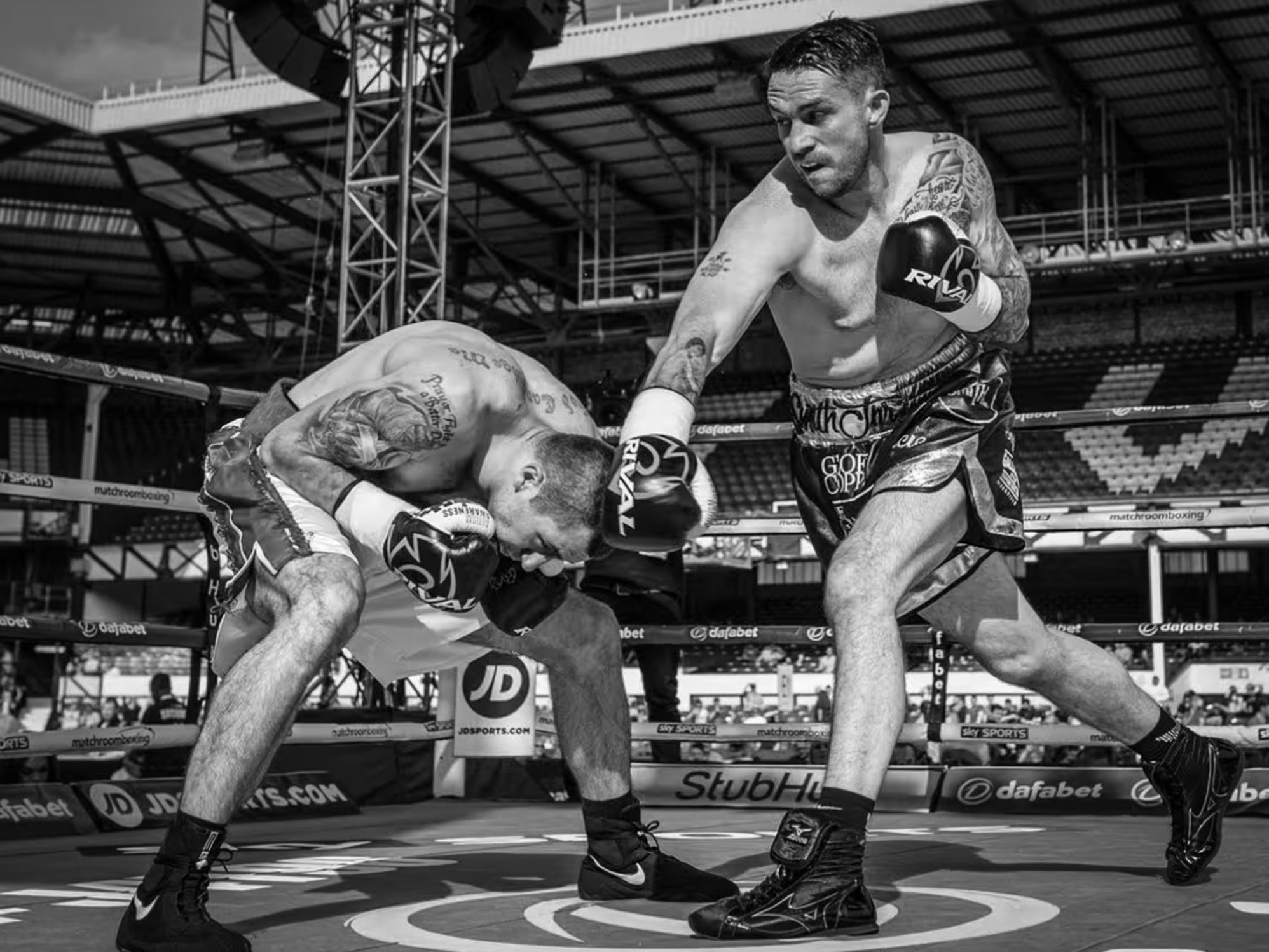
Thankfully, Nelson did stick with it and over the within five years, he clocked up 21 victories and won the cruiserweight Central Area title, the European strap and the coveted British belt, with enough defences to enter the history books as a winner of the Lonsdale belt, outright. Nelson described the value he put on the British strap. “If I’m honest with you, I never thought I’d be a Central Area champion! Then when I boxed for the British title and won it, one of the lads from the gym, called Jed said, ‘I’ve never seen a Lonsdale belt. Can I hold it?’ My dad had it on his lap and he was so proud of it as we’re all coming back on the bus from Finsbury Park, (after defeating Andy Straughn on 21 May 1989), having fought on the undercard of Nigel Benn versus Michael Watson, as chief support. I said to dad, ‘Can I give it to Jed to hold? We’ll get it back in the morning.’ I look back now and remember the disappointment on his face as I handed it to Jed and looking back, I feel really bad now.

“I always had imposter syndrome, but when I defended it, that’s when I actually believed I was the best fighter in Britain. When I beat Jimmy Thunder in Australia in 1993 for the world WBF heavyweight title, I knew I wasn’t the best heavyweight in the world, but whenever I won something at cruiserweight, I truly believed I was the best in my division. After that first British defence, that was certainly the case.”

Despite attempts at various versions of the world title, Nelson had to settle for the WBF strap, which basically meant, in the media’s eyes, he wasn’t a true champion. By the time he fought Carl Thompson on 27 Match 1999 for his WBO cruiserweight title, Nelson had amassed 32 victories, yet 12 losses, one draw and had been boxing for 10 years as a pro. Nelson recalled the build-up to the Thompson fight and his immoveable mind-set. “To be honest, I couldn’t see how I could lose to Carl Thompson and I was a big fan of his. Funny story. I actually bumped into Carl in a club in Warrington before we’d even thought about fighting and I had a girlfriend at the time and I think he was trying to chat her up or something. She said, ‘I was speaking to a guy over there who said he’s a boxer. His name is Carl Thompson.’ I said, ‘Point him out.’ She pointed over and I thought, ‘He’s a really good dancer!’

“Up to this point, a lot of people didn’t know I existed or respected me, because I’d already boxed for a world title in 1990 and drew (against Carlos De Leon for the WBC cruiserweight strap), when I was a man in a boy’s body. People thought I was a cowardly custard, because they listened to the narrative. So, when it came to fighting Carl Thompson, I wasn’t on anybody’s radar.


“However, by the time I was coming through, I’d been a sparring partner all over Europe, with the best in the world. I’d sparred Axel Schultz when he was preparing for George Foreman in 1995 and I sparred Henry Maske when he was getting ready for Virgil Hill. There was loads of them. All of these guys I sparred with in Europe, I spent three months at a time and it was hard, but I’d be getting the better of them the majority of the time. I did that for six years, so when I it came to fight Carl Thompson that night, I knew I was going to be world champion. I thought, ‘He’s not done enough for me to think he’s better than me.’


“There were guys at my gym who were former world kickboxing champions, similar to Carl. One day, I was coming out of the gym and Pele Reid and another fighter asked me, ‘Do you think you’ll beat him?’ I said, ‘Yeah. I can’t see how I lose to him.’ They started reeling off all his achievements in boxing and kickboxing and how amazingly fit and strong he was, and how devastating his punch power was. Then not long after, me and Brendan were driving off to somewhere and I asked, ‘Brend. Can I ask you something?’ He’s said, ‘What?’ I explained what the lads had just said about Carl, but that I just couldn’t see it. I said, ‘What are they seeing in him that can beat me?’ He started laughing and said, ‘Johnny. You don’t have to look at it from their point of view. As long as you see it from yours, that’s all that matters. You keep that same mind-set.’

“Leading up to that fight, not for one second, minute, hour or day before the fight, did I ever think I was going to lose. Carl had beaten Chris Eubank twice and I remember Brendan saying, ‘If Chris wins, you won’t get a world title shot,’ because I’d already sparred Chris and had him all over the place, because, as far as he was concerned, I was a bigger version of Herol Graham, who he couldn’t touch. The difference was, I hit harder.

“On the night of the fight, I loved every single second if it, apart from the knockout in the fifth, which didn’t satisfy me. I’d put him down the round before, but Carl got back up again. So, going into the fifth, I wanted to make a statement, but I didn’t hit him that hard and didn’t think the referee should have stopped it when he did.”

Nelson not only became the new WBO world cruiserweight champion, but he remained undefeated for the next six and a half years, defending his world title 15 times, including going on the road to Denmark, America, Germany and Italy. From amateur failure to pro false starts, one man always believed in him. “Nobody would have ever thought I would become world champion, apart from Brendan. When he said that to me, I thought, ‘He’s an absolute nut job,’ backing a kid who lost 10 of his 13 amateur fights and lost his first three pro fights. But Brendan had that belief and he was right. It also gave me great joy to silence the naysayers who thought Brendan was speaking nonsense about me and instead gave him the credit he deserved.”

Nelson retired in 2006 after a knee injury sustained during sparring, then entered the world of punditry, embracing it with great success. However, one accolade which needs mentioning, is his MBE in 2023 for services to boxing and to young people in South Yorkshire. The pride of Sheffield explained the value of said award. “It meant a hell of a lot to me, because, when Brendan was alive he said, ‘I want to nominate you for an MBE for all the charity and community work you do alongside me.’ I said, ‘No. I don’t want it.’ He said, ‘You’re an idiot.’ I said, ‘Brendan, I’m not you. You are a good man. I don’t deserve it.’ Roll forward to 2023 and I got a letter to say I’d been nominated for the award. I thought, ‘The reason I got this is because of Brendan, for what he did and for what he made me do and moulded me into.’ He was positively brainwashing me.


“The two people that I wish could have been there on the day
were Brendan and my mum, but they’d passed away. It was an absolute honour and I
knew that on the day these two would be looking down from heaven saying, ‘Well
done.’ When I got that award, for me, it was all about giving credit to them.
That was important. On the day, I had my mum’s name embroidered into the inside
of my jacket.”

Nelson signed off with some sage advice for any aspiring
boxer who may have lost a few fights. “Losing is as important as winning and it
tests your character. You can go to the gym, punch a bag, run 10 miles a day,
train your body to maximum fitness, but it’s all about training your mind to
cope with all eventualities. Learning how to deal with failure is very
important. Me personally – I was a professional loser before I was a
professional winner.  Don’t panic,
because there’s always a way to deal with it. Fix all the things and learn from
all those things. Not only will you be stronger mentally, you will be wiser.”

CREDITS

Article/Interview: Paul Zanon, has had nine books published, with almost all of them reaching the No1 Bestselling spot in their respective categories on Amazon. He has co-hosted boxing shows on Talk Sport, been a pundit on London Live, Boxnation and has contributed to a number of boxing publications, including, Boxing Monthly, The Ring, Daily Sport, Boxing News, Boxing Social, amongst other publications.


FROM OUR BLOG

DISCOVER THE LEGENDS

View all
THE BRENDAN INGLE STORY - COMPETITION WINNER

THE BRENDAN INGLE STORY - COMPETITION WINNER

'BVB writer, Paul Zanon is currently working with prisoners at HMP Thameside using the power of sports writing to help them develop into wordsmiths. We are delighted to support his efforts by donat...

THE NEARLY MEN - PART 3

THE NEARLY MEN - PART 3

Following on from Part Two, we will now be venturing across the Big Pond to look at four of America’s finest heavyweight fighters to lace em-up, who never achieved their crowning moment in the squ...

THE NEARLY MEN - PART TWO

THE NEARLY MEN - PART TWO

Following on from Part One, we will now be looking at a further four iconic British greats never to fully grasp a world title, albeit, not for the want of trying. TONY SIBSON Leicester born Sibson ...