


'BVB writer, Paul Zanon is currently working with prisoners at HMP Thameside using the power of sports writing to help them develop into wordsmiths. We are delighted to support his efforts by donating a prize to the winner of a competition he ran with the prisoners, which involved writing a biographical piece about Oscar ‘Ringo’ Bonavena. The winning entry is below.’
LET’S GET READY TO HUMBLE

‘There is no other source of amusement or entertainment, sport or game, that contains quite as much real drama as can be found in a contest between two evenly matched, well-trained boxers,’ astutely said Gene Tunney (world light heavyweight champion) in his 1929 acclaimed essay on boxing. Encapsulating pugilism, to give it the gentlemanly moniker, transitioning to the modern-day guise that we know today.
Looking at boxing’s history, Stateside, early settlers from England and Ireland would popularise it in the 1700-1800’s. Raw combat in rings, stakes anchoring ropes holding up bags of prizemoney, held infectious appeal. Swathes of migrants attending meets, drinking heavily and placing bets on the brutal bloodsport. A melting pot often of unsavoury factions with partisan crowds drawn along national and often racial lines. Its reputation for mass brawls and illegal activity would bring it to the attention of the authorities who could do little to stem the tide. The unscrupulous hosts enjoying the lucrative hustle of these underground dens of iniquity.
By the early 1900’s, the only sensible options was regulation, as it was simply too popular to ban. The first significant legislation was the 1920 Walker Law, legalising professional boxing in the State of New York. Pulling it out of the shadows, other cities followed suit. Las Vegas would prove to be a hot bed for the unenviable siblings of alcohol and gambling.
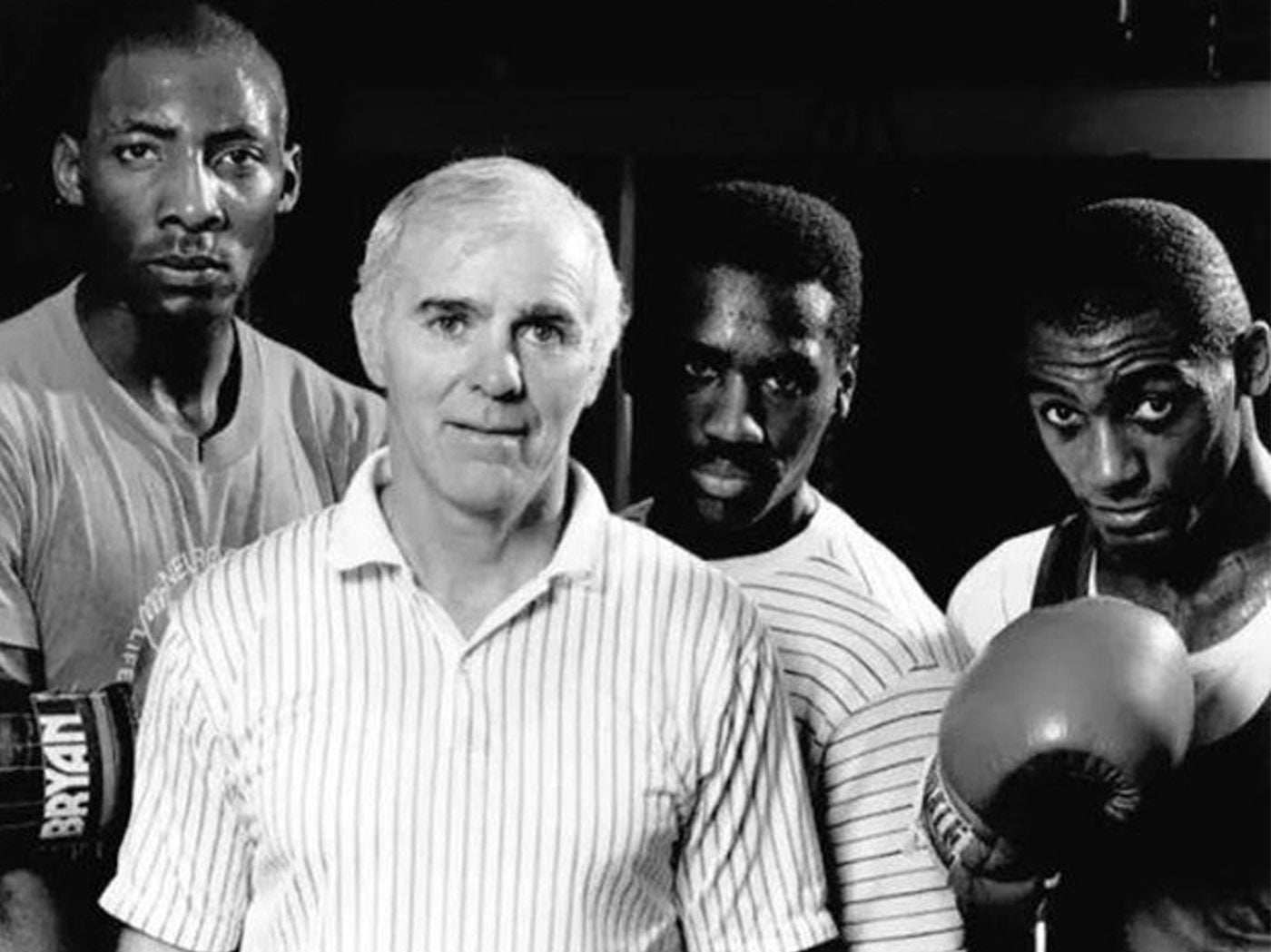
Cue, Ray Arcel. Born 30 August 1899 in Terre Haute, Indiana, USA, he would go on to arguably become the most prolific boxing trainer of the 20th century, if not of all time. Lauded by the boxing fraternity, he trained fighters for over 70 years, becoming the first trainer to have coached 20 world champions. From the 1920’s to the 1980’s, it’s reputed he was in the corner for over 2000 boxers and he achieved this, despite a forced exile of 20 years. Recognition as one of the greatest by his peers, he was inducted into the International Boxing Hall of Fame in 1992.
Boxing is all about timing and Arcel’s perfect to say the least. Making his mark in the newly regulated professional period of the 1920’s, his incisive ability and nous stood him apart. It would seem the perfect storm of losing his mother when he was only four years old and his Jewish heritage that made for his resilience. One of two siblings, the single parent family relocated and he grew up in tough East Harlem, New York, where fighting became an everyday occurrence. Arcel attended Stuyvesant High School and his intended route in life was to become a doctor.
No doubt, being of Russian/Romanian Jewish parents in the multi-ethnic enclave dominated by the Italian contingent, was character building, as they say. ‘You had to fight in those days; we were the only Jewish family there,’ he would recount in later life. One really gets a picture of the adversity he faced.
The smell of leather, beads of sweat rolling off the brow, a creaking canvas underfoot as boxers tug at their oversized shorts. Nothing is more reminiscent of the dimly lit back street gyms of a century ago. One can only speculate what the attire was for a young Arcel, suffice to say he had the talent, honed on the streets, to walk straight in. The protégé very quickly coming under the tutelage of Welshman, Dai Dollings at Grupp’s Gymnasium. It’s here that he would rub shoulders with Dai’s champions, Ted ‘Kid’ Lewis, Johnny Dundee, as well as welterweight world champion, Jack Britton. Tunney described Britton as, ‘The greatest exponent of pure boxing skill of his time,’ and it would be lovely to think of Arcel sparring with such greats, a few years after leaving college.
It’s at this time another person of huge influence came on the scene. Frank ‘Doc’ Bagley was the manager of Gene Tunney and was a specialist of closing boxer’s cuts within the one minute between rounds. By 1923, Arcel would train his first champion, Frankie Gennaro, followed by back-to-back bantamweight champs, Abe Goldstein and Charley Phil Rosenerg in 1924 and 1925, respectively.
‘A complete knowledge of the science of the game; a quick active brain, with perfect co-ordination and sound physical condition are necessary qualifications for a successful boxer of today,’ again, to quote Gene Tunney. The science, referring to improving style, technique and training methods – boxing had moved away from the classical form, in favour of using footwork, slipping the head, free use of both hands to parry and counter strike, whilst bobbing and weaving. If this was the prevailing wisdom of the day, then nobody understood it better than Arcel.
This knowledge made him one of the city’s most notable trainers by the mid 1920’s, which is when he made his next move. And let’s not forget this success came against the backdrop of the roaring 20’s, with its decadence and feel good factor. From 1925, Arcel partnered Whitney Bimstein at Stillman’s Gym around the corner from the newly built Madison Square Garden. What an inspiration to train boxers a block away from what would become boxing’s Mecca. Between 1925-34, the pair would represent numerous champions, including junior welterweight, Jackie ‘Kid’ Berg, middleweight champion Lou Brouillard, bantamweight champion Sixto Escobar and lightweight champion, Benny Leonard.
The stock market crash of 1929 and the ensuing Great Depression of the 1930’s would result in a rollercoaster ride for most boxers, not least of which, Leonard, who was described by many as, ‘One of the greatest exponents of the splendid combination perfect footwork and hard, accurate straight hitting.’ Furthermore, Arcel regarded Leonard as ‘The epitome of a great boxer,’ with his main asset being his boxing brain. Interestingly, Leonard was also noted to distract opponents by talking to them. One thinks of Muhammad Ali in this respect. Arcel cornered Leonard in over a dozen fights.
Boxers coming out of retirement was nothing new, as the economic waves continued through the 1930’s. And yet the mobsters of the day never had it so good. Muscling into boxing, they could fix matches they preferred a fighter to win and then consequently, cash in. In these prohibited days, alcohol was banned and driven underground inevitably by bootleggers, working for the mafia. One such errand boy was three weight world champion, Barney Ross, who worked for Al Capone, progressing from Street fighter to boxer. It’s interesting to note how he was one of a number of Jewish boxers of the time and under Arcel, who perhaps had a rapport with him. In any case, he went on to achieve the feat of simultaneously holding the lightweight and junior welterweight straps. Arcel’s other champions included ‘Man of Steel,’ Tony Zale, who went on to become world middleweight champion in 1940. Also, Kid Gavilan, a Cuban boxer with his unusual bolo punch, who became welterweight champ in 1957.

Arcel enjoyed a wonderfully one-sided rivalry with the incredibly talented heavyweight, The Brown Bomber, Joe Louis, who beat all but one of his 13 challengers. In fact, so frequently did Louis knock them out, that Arcel was jokingly called the ‘meat wagon,’ as he routinely dragged unconscious victims from the ring apron. One such boxer was James J. Braddock, who Louis would dethrone in 1937, kickstarting a 12 year reign as world heavyweight champion. However, Braddock did have the foresight to add a clause to their fight contract that gave him 10% of Louis future purses, should Braddock lose…..which he duly did.
Next up, was Ezzard Charles in 1950, who would outpoint Louis and give Arcel his first and only win over him. ‘As glad as I was that Ezzard beat Joe, I was sad for Joe,’ Arcel would recount in 1950, referring to The Brown Bomber falling on hard times, due to an unexpected call from the IRS involving a ridiculous sum of money for unpaid tax on exhibition bouts he did for free, for the army during the World War 2.
In the 1950’s, Arcel was arranging fights on television, which conflicted with mob connected bouts. Consequently, he was attacked with a lead pipe across the head, which sent out a stern warning to him as he battled for his life in hospital. Arcel swiftly retired from boxing and had no intention of returning. It’s hard to fathom exactly how much power the underworld would exert over boxing, which would extend to the huge media networks of the day. It’s widely rumoured Arcel was given the choice to ‘get out,’ or at the very least, make no money from the sport. In any case, his Saturday Night Fights,’ on ABC lost their sponsor in 1955, two years after the attack.

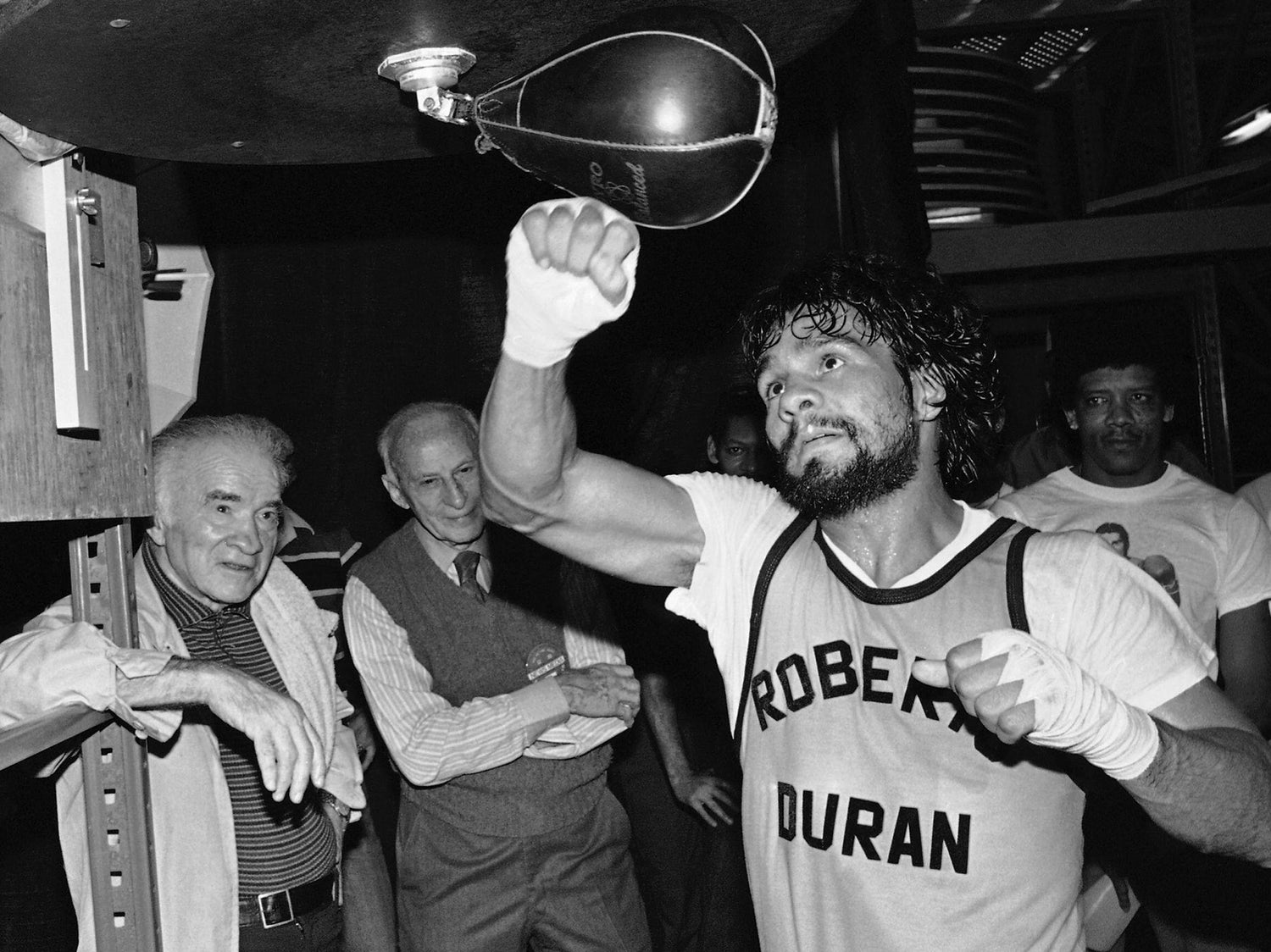
Taking an easier path, now in his mid-fifties, Arcel worked in a different industry and disappeared from the public eye. Little did he know, there would still be one more fistic chapter, when a certain Hands of Stone, Mr Roberto Duran asked Arcel to train him for a fight against Sugar Ray Leonard.
Duran’s then manager, Carlos Electa enticed Arcel out of retirement and back in the game. Whether it was an offer Electa offered Arcel which he couldn’t refuse, or it was a genuine desire to have his swansong in the corner, we’ll never know.

Duran won the world lightweight title in 1972 and would go on to defeat Leonard in a highly acclaimed battle in 1980. The Panamanian would go on to win a number of belts in his career as a multi-weight world champion, however, the second encounter against Leonard was a shocker, with the hardman saying, ‘No Mas,’ mid round, mid fight and in essence quitting. This was an act he was never forgiven for by his country and much of the boxing community. In 2016 a film called Hands of Stone was released, with Robert De Niro playing the part of Arcel, which depicts Ray’s comeback with Duran.
Arcel’s last championship fight as a trainer, was for none other than Larry Holmes, the Easton Assassin. One of the best heavyweights of that generation. He cornered Holmes against Cooney, watching his charge dispatch of his opponent via TKO in the 13th round.
His three-year association with Holmes would be his last within boxing, as he was now in his eighties. He did however, still carry on as a pundit, which was testimony to his lifelong love of the sport. He died on 7 March 1994 at the age of 94. He was a true legend in a sport where longevity is hard to come by.