

“You’ve got to be dedicated and give everything you got to stay in this sport. I’ve seen so many boxers that are one foot in, one foot out and can take it or leave it, but you need to be obsessed to win. If you are just starting out in boxing, you need to ask yourself this question – ‘Do you really want it?’” Paul Smith Jr

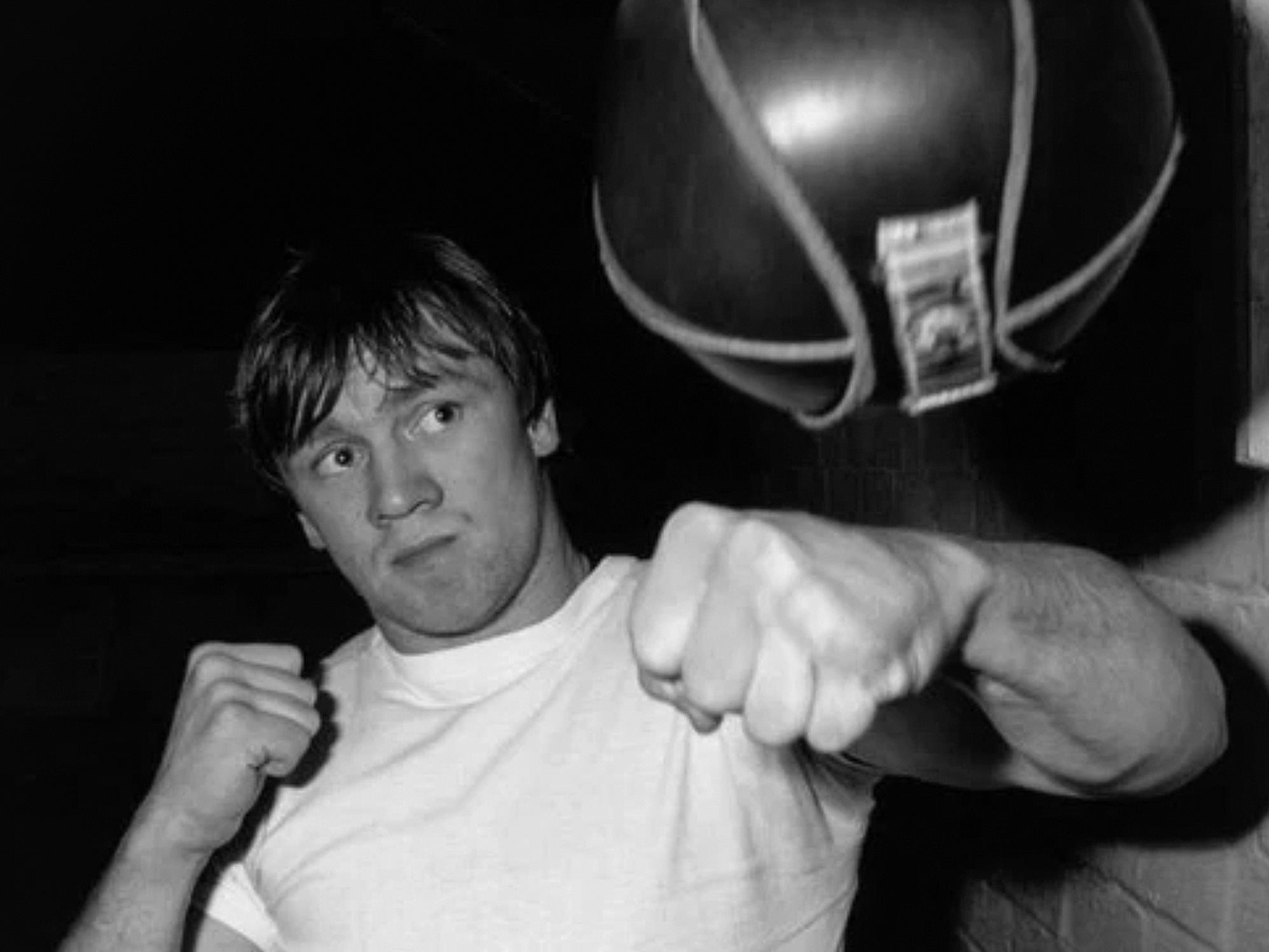
Born in Liverpool, Merseyside on 6 October 1982, Paul Smith Jr, one of the famous four fighting brothers started boxing at the age of nine. The former champion explained his route into the square ring. “My next-door neighbour went to the boxing gym round the corner, The Rotunda, which was literally at the back of our house. As a kid, I’d always been in and around gyms with my dad, who was a body builder and I’d be using the bags and lifting little weights and stuff like that. Then at home, we’d always be looking at the Rocky films and there would always be Boxing News, Boxing Monthly, body building magazines and any form of combat sport magazines lying around. I was surrounded by it and loved it.”
Smith’s amateur record was 50 victories and 25 losses with most of his losses coming early on in his amateur career. Smith added, “Jimmy Albo used to laugh and call me ‘The old pensioner,’ because I was always getting robbed. Just before the Schoolboys in 1997, before the first ever title I won, I remember thinking to myself, ‘I’m going to give it everything I’ve got and if I don’t do well, I’m going to pack it in. I was one foot in, one foot out, with things in life getting in the way, such as going out with my mates. I couldn’t grasp a style for myself and was attracted by the flashy styles of Naz (Naseem Hamed), Ryan Rhodes and Johnny Nelson, but that just wasn’t me. Then I got into the correct pace that suited me and doing what I was good at, which was box-fighting. It all kind of clicked together from there on.”
Smith’s amateur statistics don’t fully reflect the substance of what he achieved at that level. He won two Junior ABA titles, was a Junior multi gold medallist in Uzbekhstan in 2000, followed by Junior multi bronze medallist in Thessaloniki and silver medal at the Cyprus Box Cup all in the same year. In 2001 he won silver at the Copenhagen Box Cup, then in 2002 he won the light middleweight ABA’s and was runner up at the Commonwealth Games, losing by two points to future world professional champion, Jean Pascal, from Canada. Smith discussed his highlight amateur victories. “Fighting for an ABA title and everything it meant, was probably my highlight. Actually, winning that first Schoolboy title in the ABA’s, I’ll probably never pass that high. That sense of achievement of winning a national title is something that’s always stayed with me.
“I came from The Rotunda where we had plenty of ABA champions, Olympians and world champions, so I knew what it meant and what it still means now to win a senior ABA title. After winning the ABA’s, I boxed in the four nations about 10 days later and I wasn’t arsed if I’m honest, because I’d reached the top of the mountain, so to speak. Same with the Commonwealth Games. Winning the silver was a bonus for me, but winning the ABA’s made me No1 in the country.”
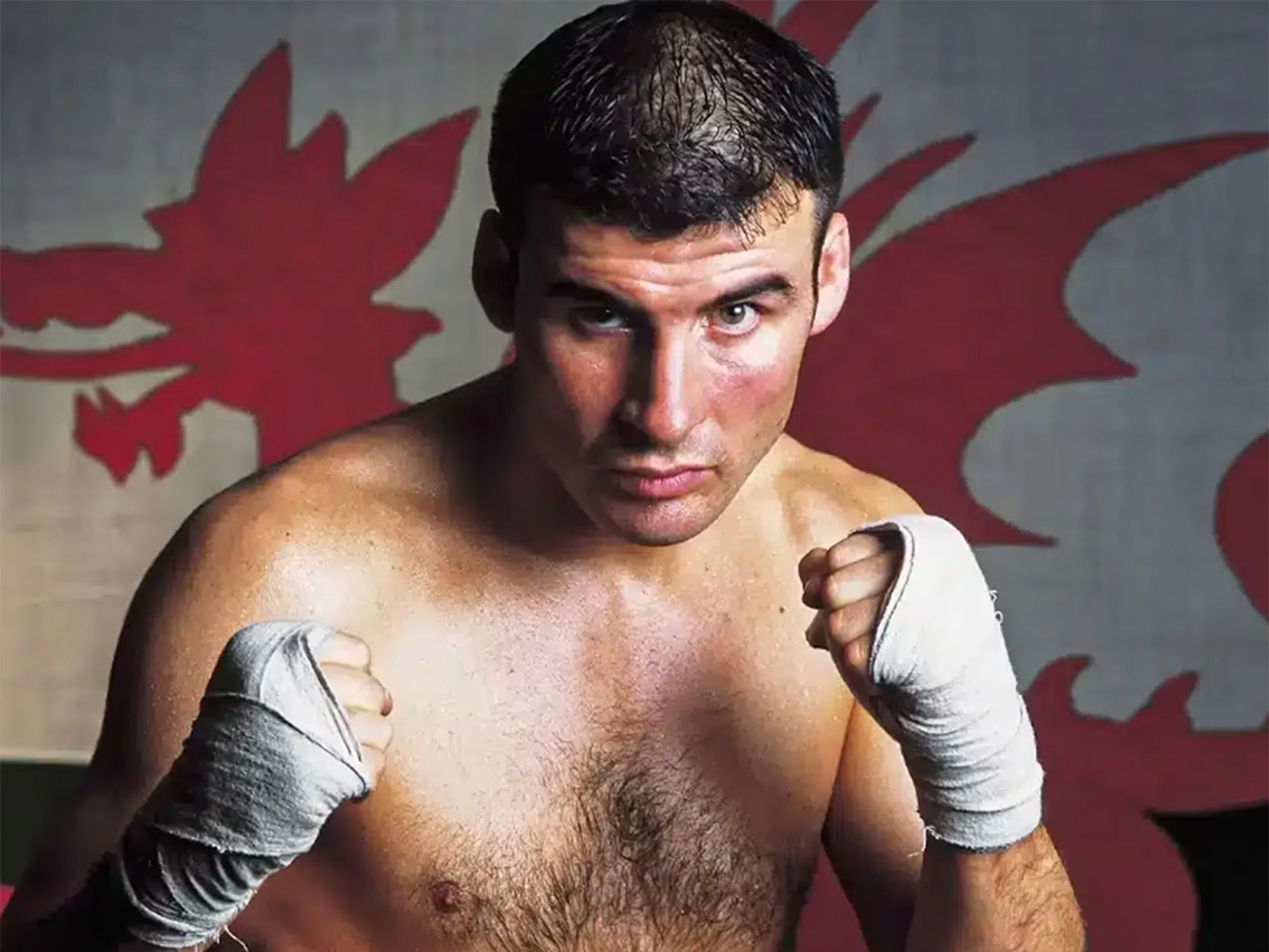
Turning professional at the age of 20 with Frank Warren, Smith had his debut on 5 April 2003, beating Howard Clarke on points at the MEN Arena, Manchester. His first 15 outings were with the highly respected figure of Billy Graham, who proved to be more than just a great trainer. Smith explained. “He’s a real boxing person and an ex-fighter. He knew the game, he knew what you were going through and there was no bravado or jargon to him. If you asked him questions, he’d answer them and there’s not many he’d get stuck on. There are so many people in the game these days who scream from the rooftops about their knowledge and they’ve probably just revised a bit of history for a few weeks and pretend that’s knowledge. All due respect but watching fighters and telling them what they need to do to win and what they are doing wrong, that’s knowledge.
“Billy was a one off. He loved the sport and he trained boxers to be proper fighters. He taught me how to fight, but he also taught me about the game and the fact that there’s a lot of bullshit and arseholes. He had a great bullshit detector and I think he passed it on to me. I took so much from him as a man, a person and a fighter.”
By 14 October 2006, Smith was 16-0 and stopped Dean Walker for the Central Area middleweight title. Smigga discussed the emotions of winning his first strap. “I remember being told about the opportunity to fight for the title and I probably could have spent a bit more time getting into my training camp and getting down to middleweight. Back then, it was almost a fad that fighters would fight, then put on weight after and then the pressure was on to lose weight and get fit. Looking back, it was the wrong way of doing things. Winning my first belt was great, but I should have just stayed light in the gym and kept the momentum instead of having a few weeks off, especially after quick knockout wins. That’s my fault and I take full responsibility for that and the criticism I got.”
One of Smith’s biggest boxing idols growing up was Sugar Ray Leonard. One year after winning the area title, the opportunity to take part in The Contender television series came up. Smith explained his route into the square ring on the big screen. “The team from the first series came over to fight against a UK team, which was called, ‘The Contender Challenge: UK vs. USA.’ It was up in Newcastle in March 2007 and Barry McGuigan was the manager of the UK team and Sugar Ray Leonard was the USA manager. It was a good event at the Metro Arena and during fight week they were interviewing us and they asked me, ‘Did you like the show, The Contender?’ I said, ‘Yeah, I liked it, but I couldn’t do it.’ They said, ‘Why’s that?’ I said, ‘I take boxing personally and couldn’t be living around someone I’m going to fight.’ Eric Van Wagenen, who is based in Los Angeles (LA) and was the executive producer of The Contender, laughed.
“After I boxed Jonathan Reid that night and stopped him in the eighth round, someone from the office called me up and said, ‘They’re going to go again with The Contender, with a new season and they want you to be part of it. You’ll have to go to LA for six to eight weeks and you’ll be filmed all the time. It will be at super-middleweight, same day weigh-ins and the winner gets $750,000. What do you think?’ After having previously said I’d hate it, with that amount of money at stake, it was too much of an opportunity to turn down. I thought, ‘If you win, that’s life changing money and at the worst, I could go over, get some experience of fighting in the States and come home.’
“My little lad had recently been born and was only about 10 months old when I went over, so that was tough, but I met some great people and it was a really good experience. At the time, it was on ESPN and the show was huge. What was strange was being in the States and going to the supermarket and getting stopped for autographs and people wanting to chat.
“The whole experience was amazing. I was getting to sit with Buddy McGirt and Sugar Ray Leonard, at different times of the day, one to one. I absolutely idolised Ray Leonard and when we were kids we always watched the Fabulous Four video on VHS, which was Hagler, Leonard, Hearns and Duran. I’d also watched Buddy as a coach before and seen him turn around Arturo Gatti’s career around for him. Sitting there with them, talking boxing and asking them questions; you couldn’t buy that.
“One day, they brought in Peter Manfredo, who was runner up in the first series to Sergio Mora and I had to spar Manfredo under the supervision of Ray Leonard, while everyone was watching, including Sergio Mora. I don’t take liberties in sparring, but I also knew I had to make a good impression. I absolutely gave it to Manfredo and put it on him at this gym, which used to be an old warehouse and is where they filmed Million Dollar Baby with Clint Eastwood.
“I did well in that spar and I got the respect of the onlookers. I’m still in touch with Ray Leonard and Buddy to this very day, which almost sounds like a strange thing to say, because of who they are.”
Smith won his first fight in The Contender against David Banks by split decision, but due to two terrible cuts, he was unable to continue and had to cross back over the big pond to Liverpool. Two fights and five months later, on 8 March 2008 he stopped Cello Renda in six rounds to be crowned the English Middleweight champion but unfortunately lost it in a very debatable points defeat against Stephen Bendall. However, greater things lay ahead for the humble Liverpudlian.
On 30 October 2009, Smigga beat Tony Quigley for the British super middleweight title. Smith discussed the journey to gaining the historic British strap. “Winning the British title was a massive achievement but taking a step back – with the Renda fight, that was a very good one, even though I remember how much weight I had to lose to get down to middleweight. I remember Dean Powell saying that I should move up to super-middleweight and I was like, ‘No. I’m not big enough.’ In hindsight, if I had been in the gym more and had been more disciplined, I would have been okay for 160lbs. When I lost the title to Bendall, that fight really pissed me off and knocked me for six, because I thought I’d done enough to win it and so did those on commentary. I don’t think that referee got much work after that fight and the rules got changed soon after requiring three judges for title fights.
“After that fight, Dean Powell said, ‘Move up to super-middleweight, you’ll still get opportunities there. I’ll ask if you can be made mandatory for the British title.’ Then soon after the Quigley fight happened which was a great fight. I was at the first ever boxing show at the Liverpool Arena, which was Quigley and Dodson, and Dodson was probably meant to win that, but Quigley came on strong in the last rounds and won. I was sitting there with my palms sweaty and really absorbed by the atmosphere and how good a fight it was, but I was thinking, ‘I can beat him. I want that belt next.’ Soon after the fight was made.
“I won the purse bids, which was a big purse at the time, but it was a fight that everyone wanted to see in Liverpool, because it was a proper local derby. You’d go into pubs and half the city was against you because you were not from their region, whereas the other half were behind you because you were one of theirs. We were both Reds (Liverpool FC fans) aswell! Quigley had the momentum from winning the title and was on the crest of the wave and now it was my chance to prove I was the best. My mentality was, ‘It’s not a case of winning the belt,’ it was more a case of, ‘You can’t lose.’
“I remember the way Quigley came on strong in the last few rounds against Dodson that I needed to come on strong at the end also. That was my mindset in the training camp. I wanted to do well in the first four rounds, then in the middle four have a little look and see what’s going on but then make sure the last rounds are mine. He got a couple of the early rounds, a couple of the middle ones and the latter ones I think I took over in what was a very good fight, but close fight. It wasn’t the most technical fight, but the pressure of the local derby was intense and the atmosphere was amazing. We’d spoken so much shit to each other that it would be hard for either of us to lose on home turf. Thankfully, I did enough to come out on top.”
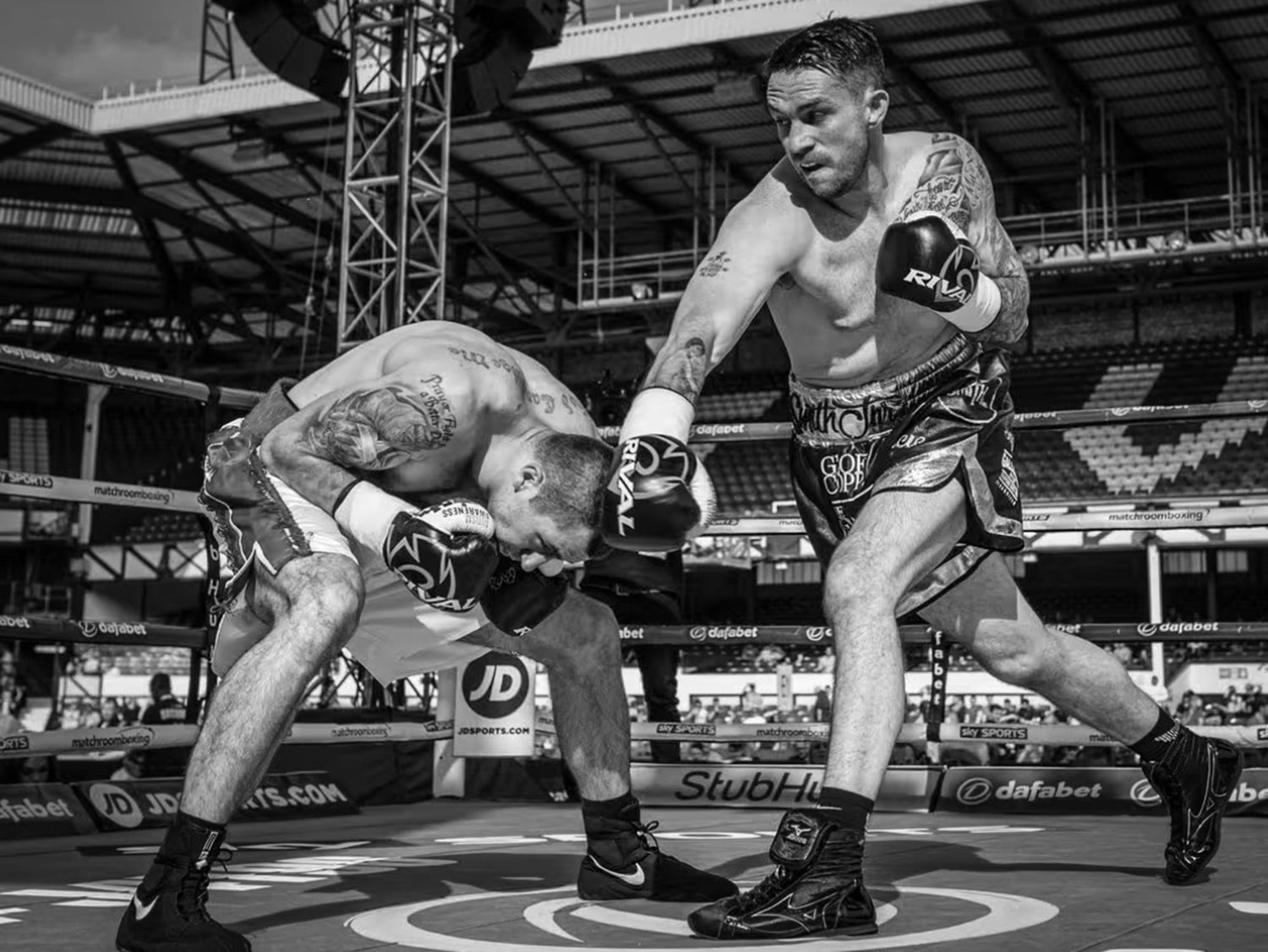
Smith defended the title against Tony Dodson, but then lost it on 11 December 2010 to James Degale. ‘Chunky’ then lost the title to George Groves and Smith unsuccessfully challenged him for the Commonwealth and British titles, being stopped in the second round. Despite not fighting for a year after the Groves loss, when he returned, Smith made his mark by winning a tune up fight against Tommy Tolan and then regaining the vacant British super middleweight title, by stopping Tony Dodson in six rounds.
 Smith vs Dodson 2nd Fight June 2013
Then came the opportunity to travel to Germany on 27 September 2014 and fight for the WBO world super middleweight title against Arthur Abraham. Smith recalled the fight and the highly contested result. “I was at the first press conference and one of the lads I was with asked Arthur Abraham for a picture with all of us. We got the photo and I didn’t make any fuss and was nice as I could be. I wanted him to walk away thinking, ‘He’s just a fan.’ That was the plan, then I went home and trained my arse off and was the best I could be.
“I really fancied the job and knew I had what it took to beat him. On the night, I outworked him and the commentary also thought that. I was definitely doing the better work, but when the scores were read out, that was like a kick in the balls.” (Two judges gave it 117-111 and the other an inexcusable 119-109). “Then in the rematch, we were both a bit better,” (but once again, the judges favoured their man in Germany with scores of 116-112, 117-111x2).
 Smith vs Abraham 2nd fight February 2015
“Straight after the rematch I got surgery on my elbow and while I was on holiday on the beach recovering, I got a call to say, ‘The Andre Ward fight is there if you want it.’ As opposed to the first Abraham fight where I was on weight, the camp went perfectly and I was fit, against Ward the build-up was almost the opposite.
Ward stopped Smith in the ninth round on 20 June 2015 at the Oracle Arena, Oakland, California. After three back-to-back wins, on 17 June 2017, Smith went out on his shield challenging Tyron Zuege in Germany for his WBA world super middleweight title, losing via a points decision. He retired with an incredible 38 victories with only seven losses. Instead of focusing on his own achievements, Paul Smith Jr preferred to discuss the fact that all four Smith brothers won a senior ABA title and a professional British title. “Now that really means a lot. With Liam and Callum winning world titles, and me and Stephen coming so close, it’s an incredible achievement. We’ve all headlined in America against top fighters. Stephen was in Connecticut against Jose Pedraza, I fought Andre Ward in California, Liam against Canelo in Texas and Callum a number of times, including Hassan N’Dam at Madison Square Garden. For four kids who grew up on an estate in Kirkdale, that’s not bad. At the time of writing, it’s almost 10 years since I’ve retired and I sometimes have to stop myself and ask, ‘Did we really do all that?”
 Smith vs Ward June 2015
There’s an old expression, ‘Success breeds success,’ and it certainly has within the Smith household. Smith talks about his son, also called Paul, who has already won national titles as an amateur. However; one would have to ask, does that make him Paul Jr, Jr? Smith laughs, then replies, “Blame my wife for that! I was going to call him Callum and then she said, ‘No. He’s going to be Paul.’ He’s a really good kid and boxes in the NABC’s and also for England. He’s very talented and could turn pro, but he’s going to try to see how far he can go in the amateurs first.
“He’s also an actor and he’s doing really well on that front also. He’s just filmed season three of Time on BBC One and has just signed with a top agent in London. I just want him to be happy in whatever he pursues. If it’s boxing, I’ll support him in that and if it’s acting, same with that. It’s a pleasure to be his dad and I’m so proud of him.”
From Real Gone Kid to the Kid from Kirkdale who did well. Thanks Paul Smith Jr for the interview.
Paul Zanon, has had 11 books published, with almost all of them reaching the No1 Bestselling spot in their respective categories on Amazon. He has co-hosted boxing shows on Talk Sport, been a pundit on London Live, Boxnation and has contributed to a number of boxing publications, including, Boxing Monthly, The Ring, Daily Sport, Boxing News, Boxing Social, amongst other publications.